
Have you ever noticed how transmission towers, angle steel members, and bolts standing outdoors year after year, exposed to rain, sun, and dust, rarely show large patches of red rust? The same goes for power line fittings that suspend conductors and connect insulators, they retain a silver-gray sheen, as if naturally resistant to corrosion. Behind this durability lies a simple solution: a layer of zinc. More precisely, it is zinc’s “sacrificial” action that protects the underlying steel from corrosion.
1.How Does Zinc Prevent Rust? Zinc as a Sacrificial Anode
The principle is straightforward: zinc is more electrochemically active than iron. When galvanized steel is exposed to humid air, even if the zinc coating is scratched and the steel beneath is exposed, zinc and iron form a microscopic galvanic cell. Zinc acts as the anode and preferentially corrodes, sparing the iron. This is known as the sacrificial anode protection method. In essence, galvanizing protects steel by using a more active metal (zinc) to absorb the attack of oxygen and moisture. It is cost-effective and reliable, which is why it remains the industry’s first choice for corrosion protection.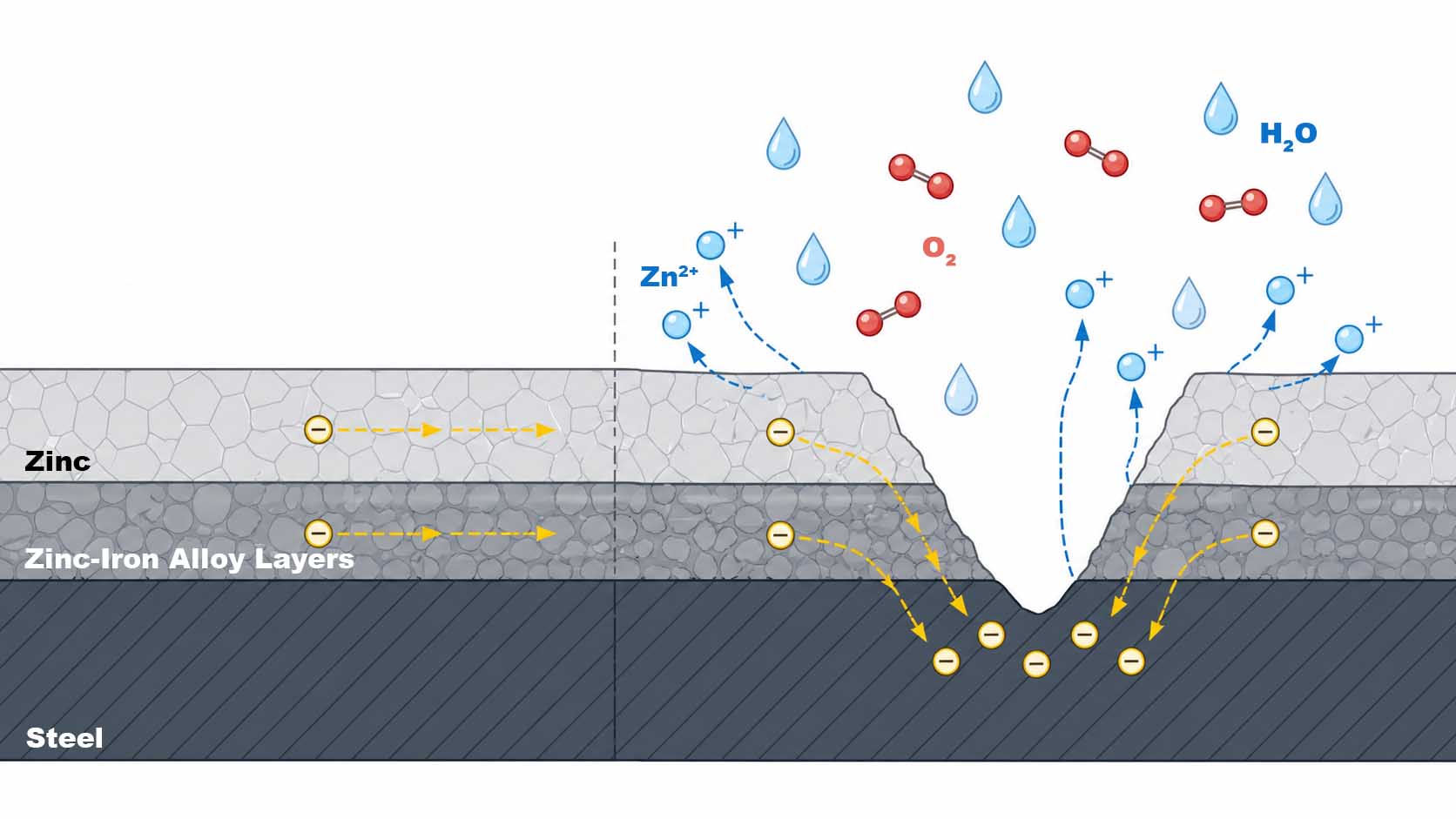
2.Types of Galvanizing: What’s the Difference Between Hot Dip Galvanizing and Electro-Galvanizing?
The two most common methods for applying zinc to steel are hot dip galvanizing and electro-galvanizing (often referred to as “cold galvanizing” in casual terms).
| Aspect | Hot-Dip Galvanizing (HDG) |
Electro-Galvanizing (Cold Galvanizing) |
| Process principle | Cleaned steel is immersed in molten zinc (~450°C). Iron reacts with zinc to form zinc-iron alloy layers, topped by a pure zinc layer. | Zinc ions are reduced and deposited on the steel surface by an electric current in an electrolyte solution. |
| Process temperature | High (~450°C) | Ambient (room temperature) |
| Typical process steps | Degreasing → pickling → fluxing → galvanizing → cooling → passivation | Electro-cleaning → pickling → electroplating → passivation |
| Coating thickness | ≥ 45 µm, can exceed 200 µm | 5–25 µm, uniform |
| Appearance | Dull silver-gray, often with visible spangle (crystallized zinc patterns) | Bright, silvery, smooth surface |
| Bond strength | Metallurgical bond (alloy layers) Very strong |
Physical deposition Relatively weaker bond |
3.Pros and Cons of Hot-Dip vs. Electro-Galvanizing
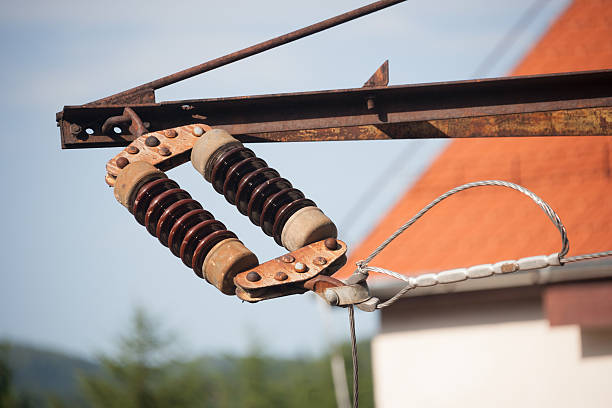
• Advantages of HDG:
Excellent corrosion resistance due to the thick coating and the presence of zinc-iron alloy layers, which also provide good mechanical durability against impacts and weather. HDG can protect outdoor steel structures for decades.
• Disadvantages of HDG:
Slightly rougher surface, possible minor zinc lumps (run-in), and it may not be ideal for precision threads or sliding fits. The high-temperature immersion can also cause distortion in thin sections.
• Advantages of Electro-Galvanizing:
Thin, uniform coating with precise dimensional control and a bright appearance. Suitable for indoor products or those requiring tight tolerances and good aesthetics.
• Disadvantages of Electro-Galvanizing:
Lower corrosion resistance. Once the coating is damaged, its protective ability drops sharply, making it unsuitable for prolonged outdoor atmospheric exposure.
For these reasons, HDG is the go-to choice for outdoor applications, while electro-galvanizing (cold galvanizing) is used indoors or in non-corrosive environments. Other methods such as zinc-rich paint or mechanical plating exist for specific uses, but they are beyond the scope of this article
4.Why Must Power Fittings and Towers Use Hot-Dip Galvanizing?
Transmission towers and power fittings operate outdoors for almost their entire service life, exposed to wind, acid rain, dust, temperature extremes, and even industrial atmospheric corrosion. In such environments, the thin, tens-of-micrometers coating from electro-galvanizing is insufficient. Only a thick hot-dip galvanized coating can provide more than 30 years of reliable protection.
The power industry imposes stringent, nearly exacting requirements for HDG. For towers and power fittings, components must have no uncoated areas (bare spots), blisters, or zinc runs that could interfere with assembly. The coating must be tightly bonded to the steel. In terms of thickness, for steel thickness ≥ 6 mm, the local coating thickness shall not be less than 70 µm, and the average thickness shall reach at least 85 µm; thinner steel has corresponding minimums. Field tests often include copper sulfate solution immersion, where no iron exposure is permitted after a specified number of immersions. Once a tower is erected, it is difficult to apply touch‑up coatings, so all corrosion protection depends entirely on the hot-dip galvanized layer.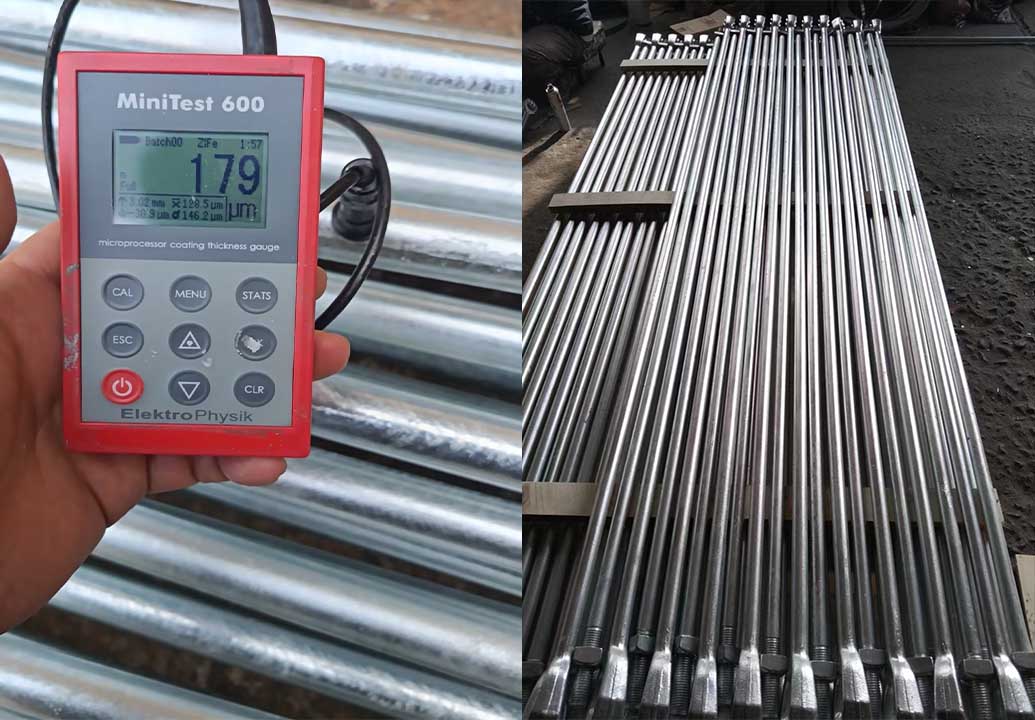
Professional manufacturers represented by Tengtop perform galvanizing on all their products strictly in accordance with the ASTM A153 standard, ensuring greater reliability. The standard for hot-dip galvanizing on iron and steel hardware. This ensures greater reliability, meeting and often exceeding industry demands for coating quality and durability.
5.Some Practical Thoughts
Galvanizing is not a flashy, high-tech solution. It is almost “simple-minded”, sacrificing itself to preserve the steel. Yet this straight forward anticorrosion method supports transmission towers all over the world and protects countless power fittings. The next time you see those silver or gray towers, fittings, and bolts, remember: that zinc layer is quietly consuming itself outdoors, taking the corrosion hit for the steel inside.