
Forged Aluminum Alloy Power Fittings: Responding to New Supply-Demand Dynamics and Green Energy Opportunities Through Core Technological Breakthroughs
Abstract
In global power infrastructure, power fittings serve as critical connecting and load-bearing components in transmission lines. Their materials and manufacturing processes are undergoing a transition toward green and high-performance solutions. Taking the high-performance forged aluminum alloy fittings that recently passed bench tests conducted by a certain group as an example: compared with traditional cast iron fittings of the same specification, the weight of the forged aluminum alloy fittings is reduced by approximately two-thirds, while their strength reaches 1.7 times that of cast iron. This achievement demonstrates the feasibility of the “aluminum instead of steel” technology roadmap and provides a technical response to the mandatory requirements for forged processes in power industry bidding specifications. This paper systematically analyzes the engineering significance and development prospects of forged aluminum alloy power fittings in the context of new power systems from the dimensions of technical requirements, performance advantages, manufacturing efficiency, market applications, and value balance.
1.Driven by Technical Requirements
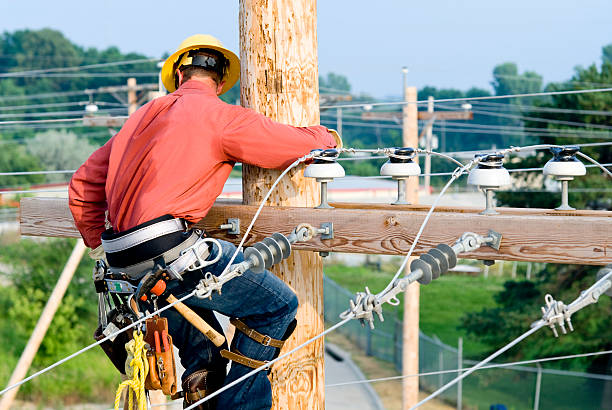
In recent years, the reliability requirements for power fittings in power systems have increased significantly, a trend directly reflected in the evolution of bidding technical specifications. For “three-crossing” lines that traverse highways, electrified railways (including high-speed railways), and important power transmission corridors, as well as for extreme operating conditions such as high elevation drops, heavy icing, high wind, and low temperature, procurers have explicitly mandated forged processes for certain fittings. The above application scenarios impose stringent constraints on mechanical strength, fatigue resistance, and internal integrity (absence of casting defects such as shrinkage cavities and porosity) of the products. Furthermore, forged fittings must satisfy rigorous requirements for grip strength, ultimate load, wear resistance, and fatigue life. Such demanding testing standards establish professional barriers for companies with genuine technical capabilities while simultaneously compelling industry-wide technological upgrades.
2.Performance Advantages
The defining characteristic of the forging process is the preservation of metal flow line continuity, which constitutes the fundamental difference from casting. This feature endows forged fittings with three primary advantages.
- Mechanical Properties
Forged aluminum alloy fittings achieve a strength up to 1.7 times that of cast iron under identical specifications, enabling more lightweight design under equivalent load conditions. The weight reduction of approximately two-thirds lowers installation difficulty and operational risks and reduces structural loads on the line. Specifically, forged aluminum alloy fittings achieve a weight reduction exceeding 60% compared with traditional products, significantly decreasing transportation and installation costs as well as operational hazards. Simultaneously, by reducing mechanical loads on towers, insulators, and conductors, they enhance the overall safety margin of the line. - Fatigue Resistance
The continuous metal flow line structure enables more uniform stress distribution and eliminates internal defects commonly found in castings—such as shrinkage cavities and porosity—thereby providing a longer service life under long-term alternating loads. - Energy Efficiency and Environmental Friendliness
Aluminum alloy exhibits excellent atmospheric corrosion resistance. As a non-magnetic material, it generates virtually no hysteresis loss in AC lines, resulting in significant energy savings over long-term operation. At a current of 200 amperes, the energy consumption of aluminum fittings is only 5%–10% of that of traditional iron fittings. Statistical data indicate that when energy-saving aluminum suspension clamps replace malleable cast iron suspension clamps on 110 kV and 220 kV high-voltage lines, each 100 kilometers of line saves 9.6×10⁴ kWh of electricity annually. - Manufacturing Efficiency Comparison
For fitting manufacturers, the forging process improves not only product performance but also production efficiency. Taking suspension clamps as an example, the efficiency difference between forging and casting lies primarily in the forming stage. The casting process requires melting aluminum ingots into liquid form and injecting them into molds, resulting in a slower forming speed. In contrast, the forging process heats aluminum bars to a plastic state and then forms them under pressure; the solid-state forming process shortens both heating and die forging cycles, thereby significantly reducing production tact time.
3.Manufacturing Efficiency Comparison
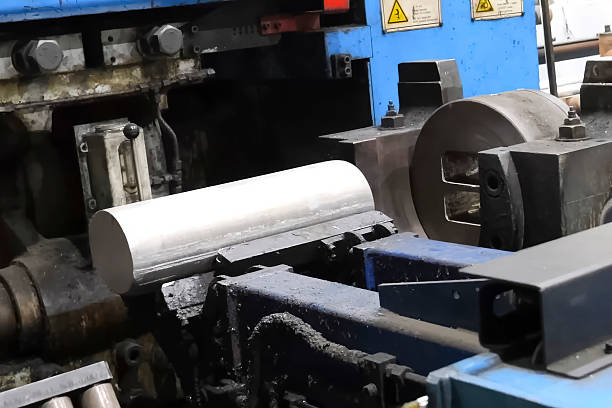
For fitting manufacturers, the forging process improves not only product performance but also production efficiency. Taking suspension clamps as an example, the efficiency difference between forging and casting lies primarily in the forming stage. The casting process requires melting aluminum ingots into liquid form and injecting them into molds, resulting in a slower forming speed. In contrast, the forging process heats aluminum bars to a plastic state and then forms them under pressure; the solid-state forming process shortens both heating and die forging cycles, thereby significantly reducing production tact time.
Additionally, the forging process achieves higher material utilization. Through precise die design and process control, material waste is minimized. Currently, leading companies in the industry have adopted professional simulation analysis tools for forging process modeling to optimize die design and reduce trial-and-error costs. Process optimization directly translates into corporate profitability. Taking one power fitting manufacturer as a case study: after a period of intensive investment in production line construction and technology development, the company fully implemented lean production and process optimization, ultimately achieving an 80% year-on-year increase in total profit.
4.Market Applications and Development Prospects
“Aluminum instead of steel” is becoming a clearly defined technology roadmap for the power fitting industry. Forged aluminum alloy fittings offer not only lightweight advantages but also reduced line losses and extended service life (three to four times that of traditional steel products) due to their conductivity and corrosion resistance, forming a differentiated technological competitiveness. This competitive edge enables them to stand out among nearly a thousand peer companies and solidly capture the demand of power enterprises for high-standard products.
Currently, forged aluminum alloy fittings have been widely applied in new energy projects, with sustained strong demand in major power transmission projects, photovoltaic power stations, and wind farms. Industry experts generally agree that with the advancement of energy structure transformation and smart grid construction, highly efficient and energy-saving forged aluminum alloy fittings will encounter greater development opportunities.
5.Balancing Economic and Social Value
Although small in size, power fittings are a critical link in ensuring safe grid operation, and their quality and performance directly affect power supply reliability. This characteristic necessitates that both suppliers and procurers of power fittings seek an optimal balance between commercial benefits and social responsibility. Pure price competition is no longer the mainstream trend in the industry.

Data indicate that although aluminum fittings typically cost three to five times as much as malleable cast iron or cast steel fittings, their life-cycle total value far exceeds the initial investment. This value is reflected not only in product performance but also in long-term operational economics. Studies show that when aluminum alloy replaces cast iron for suspension clamps, the electricity cost savings resulting from reduced energy consumption can offset the incremental cost of the aluminum material in less than 12 years.
Enterprises should also recognize the social value of technological innovation. The energy-saving effect of power fittings directly contributes to energy conservation and emission reduction goals. Each deployment of a high efficiency, energy saving aluminum alloy fitting correspondingly reduces energy waste and carbon emissions. The creation of such social value ultimately translates into enhanced brand value and market competitiveness.
Conclusion
Forged aluminum alloy power fittings, through material substitution and process upgrading, achieve significant improvements in mechanical properties, fatigue life, and energy efficiency. Faced with the comprehensive requirements of new power systems for equipment reliability, lightweight design, and green low-carbon performance, forged aluminum alloy fittings possess clear technical and economic advantages. Industry practice demonstrates that the forging process not only improves product performance but also enhances manufacturing efficiency and material utilization. At the market level, this technology roadmap has gained broad acceptance in new energy and key power transmission projects. In the future, with the deepening of energy structure transformation and smart grid development, forged aluminum alloy power fittings will play an increasingly critical role in ensuring safe grid operation and promoting energy conservation and emission reduction.