
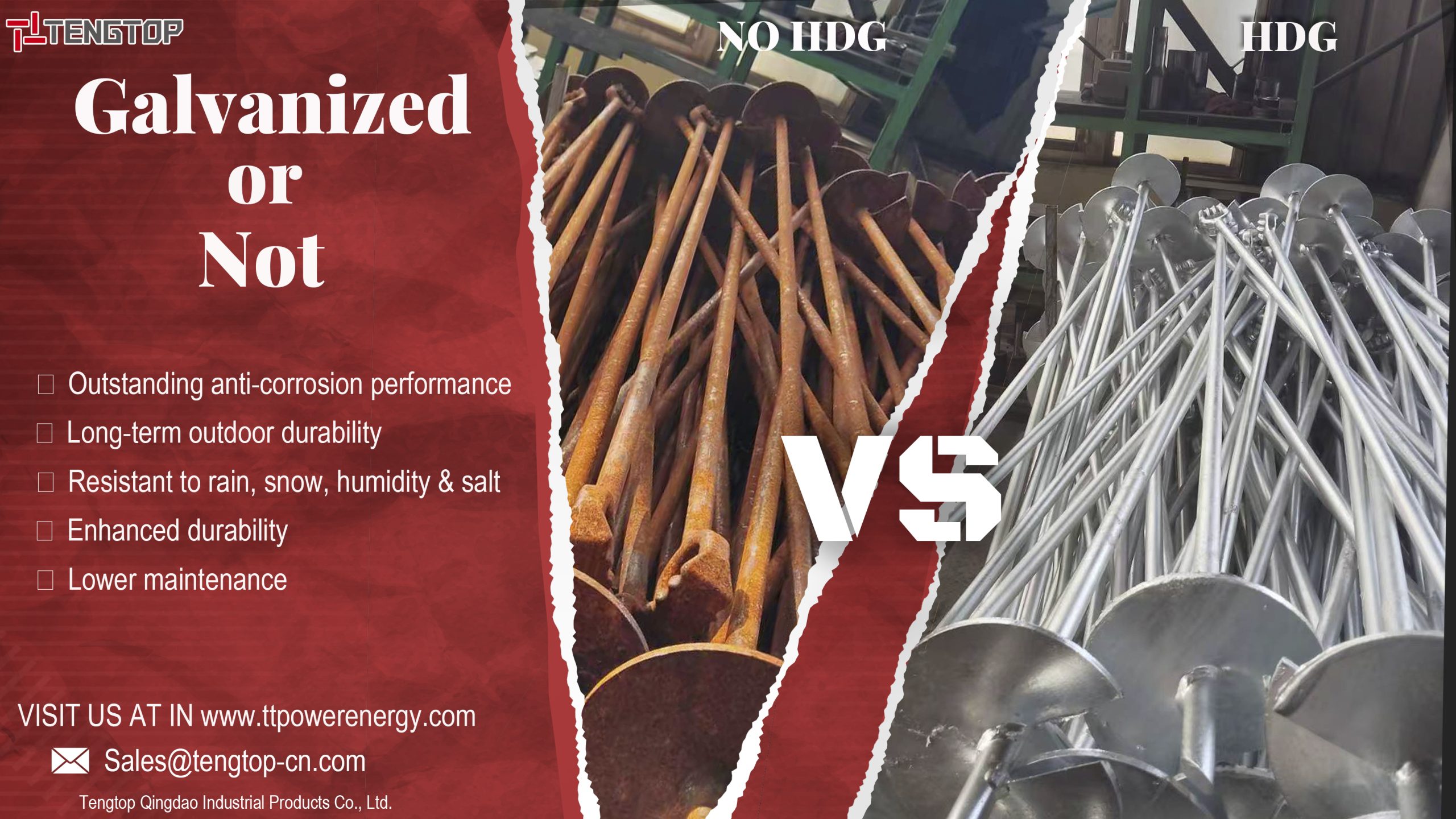
Galvanized vs. Non-Galvanized Power Line Anchors:
Why Surface Protection Matters In power transmission and distribution systems, anchor rods play a critical role in maintaining line stability and long-term safety. While anchor design and material strength are essential, surface treatment—especially galvanizing—often determines how long the anchor can truly perform in real-world conditions.
Galvanizing is essential — not optional.
- Corrosion Resistance: The zinc coating acts as a protective barrier, allowing the anchor rod to withstand moist conditions, acidic soil, and coastal environments.
- Reduced Maintenance Costs: Galvanizing significantly extends service life and reduces replacement frequency, lowering long-term maintenance costs.
- Long-Term Stability: The galvanized layer helps maintain structural integrity, ensuring the anchor rod’s load-bearing capacity and long-term reliability.
Conclusion:
Protection Is Performance A power line anchor is designed to stay underground for decades. Without galvanizing, strength fades long before the project’s service life ends. Galvanizing isn’t an upgrade—it’s a requirement for dependable power infrastructure
Choose HDG for durability and lower maintenance.